
Ouro Madiaw

Beyond the Harvest: Women Are Building Lasting Prosperity

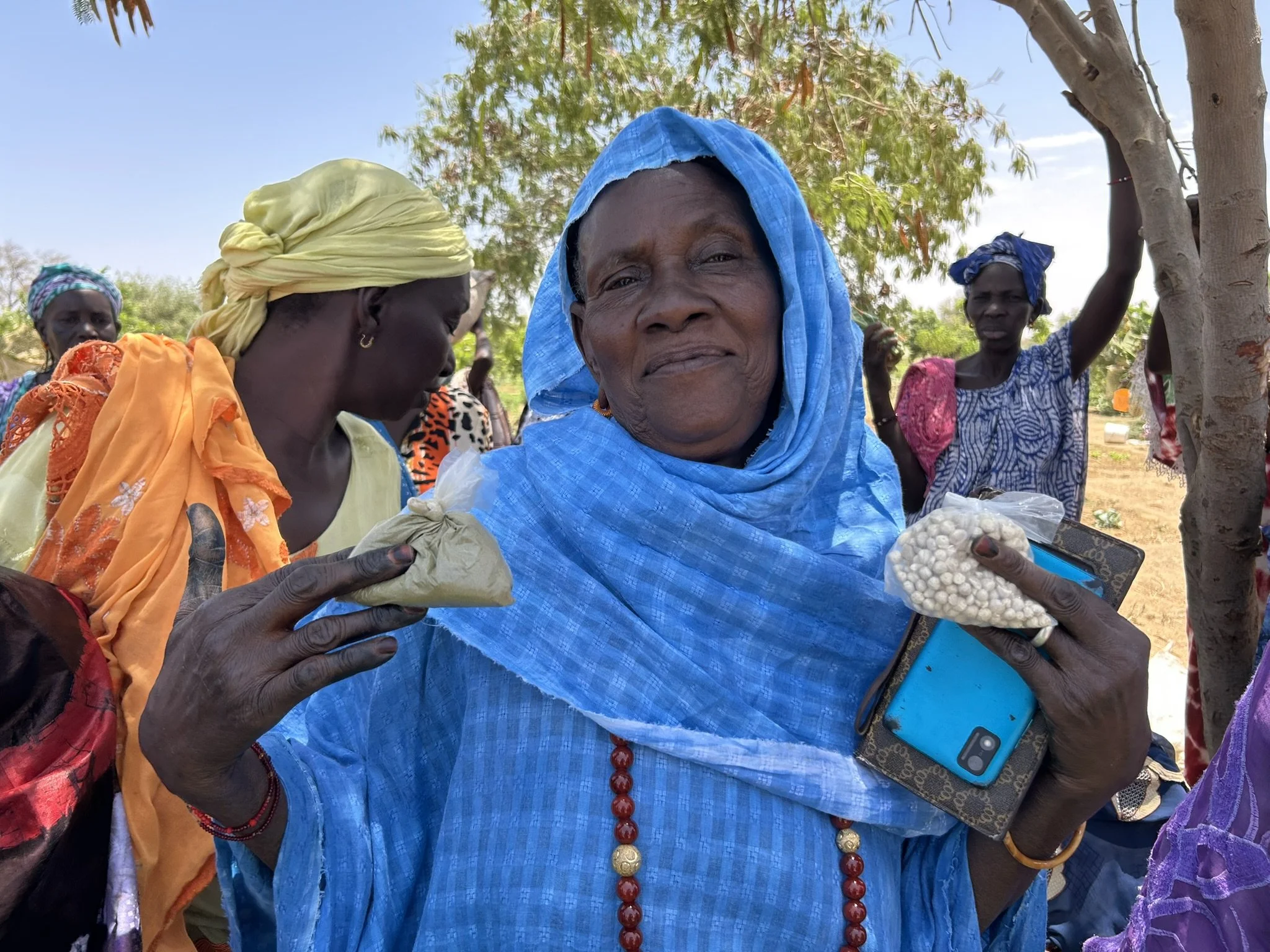
A woman from Ouro Madiaw displays the dried moringa powder and peas she now sells at the market.

It’s easy to see the physical transformation a garden brings. Dusty, barren fields quickly become verdant oases overflowing with vegetables and fruit trees. What’s harder to see from afar are the quieter revolutions taking place inside participating villages. Beyond the fences, these gardens are reshaping local economies, creating prosperity that reaches far beyond the harvest.

This year, that transformation has reached a new high. Together, Andando’s partner women’s gardens have built collective savings of $60,953! That’s group savings in addition to the individual profits earned by garden members. In rural Senegal, where access to capital is scarce, this is extraordinary! In the hands of women who have long been excluded from financial decision-making, it is unprecedented.

The women of Ouro Madiaw have surpassed their goal, saving more than twice the target amount, with an impressive $4,280 now in their account.

These reserves mean the gardens can manage their own year-to-year operations and repairs without waiting for outside assistance. They also open the door to new opportunities. Some cooperatives are now transforming their harvests into dried or preserved products that command higher prices. Others have launched microfinance associations, lending from their savings so members can start businesses or cover urgent expenses. What began as a source of food security has become a platform for growing women’s leadership, innovation, and resilience in each community.

The president of the Keur Pathe Malick cooperative signs the 50/50 cost sharing agreement after reaching the savings goal.

When Ndiawara’s pump failed last year, the cooperative’s savings allowed them to replace it immediately and keep the garden running.

In the harsh environment of the Sahel, setbacks are inevitable.

What’s different now is that these women are prepared. With savings in hand and strong cooperatives to lead the way, they are shifting the future of their villages, making these gardens, and women’s leadership, a permanent part of each community.
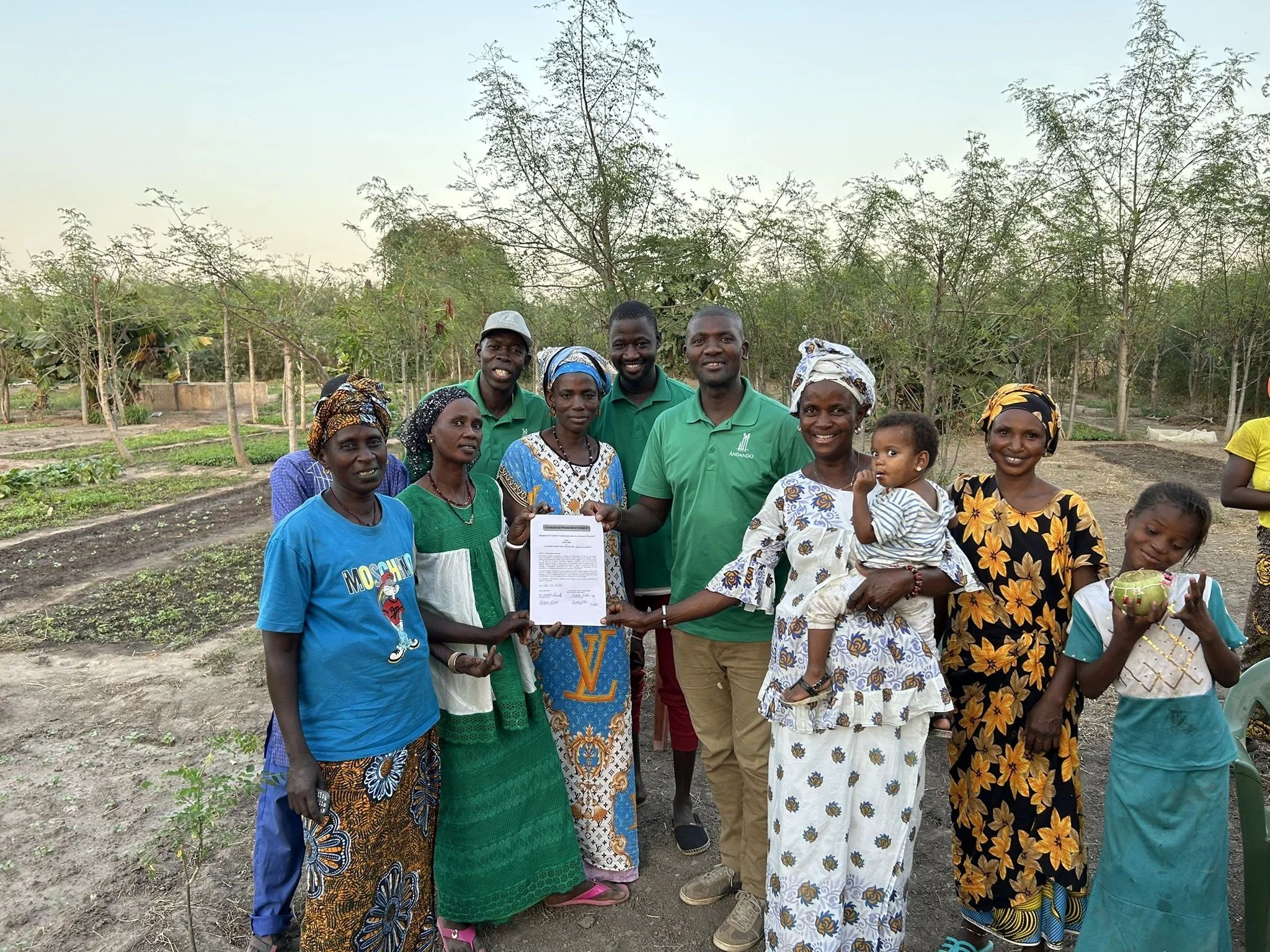
Sare Diouma’s cooperative reached their savings goal earlier this year, making them eligible to expand their garden with aquaculture basins.

The Best Time To Plant A Tree?

Established trees in the Lamarame Garden help fortify the soil and protect from harsh weather conditions.

…was 20 years ago. The second-best time is now! This old proverb still rings true, especially for our work in Senegal’s northern region of Podor. This part of the Sahel has been devastated by deforestation, and with climate change leading to longer hotter dry seasons, it feels like the Sahara Desert is right next door.

The village of Belel Kelle, in the northern region of Senegal, experiences longer and hotter dry seasons due to deforestation and climate change.

Starting a garden in this environment is a leap of faith and planting a tree is an act of defiance, that we need not accept what is, we can create a better life for ourselves and the world around us.

At the Ouro Madiaw Garden established trees, such as mangoes, papayas, and bananas, improve the soil while protecting the people and crops from harsh conditions.

Trees are the foundation of every Andando garden. They protect people and crops from harsh conditions, raise ground water levels, build new fertile topsoil, and create permanent barriers against livestock. Trees keep Andando gardens flourishing year after year without any synthetic fertilizers, pesticides, or herbicides, and help infrastructure to last as long as possible so that upkeep is gradual and manageable at the local level.

Live-fencing provides the same soil regenerating benefits as other trees while also creating a permanent barrier against livestock and making upkeep gradual and manageable.

To date Andando has established over 50,000 native trees in our gardens and surrounding communities. That’s not only incredible for our partners but represents a huge amount of carbon sequestered out of the atmosphere!

Planting and tending to the seedlings sheltered inside the Tree Nursery in Keur Soce. A second nursery will be built in Podor, the northern region of Senegal, next month.

We are breaking ground next month on a new tree nursery in Podor so that we can expand and accelerate our tree planting program. This location will soon produce tens of thousands of trees year round helping to jump-start new gardens and allow Andando to begin reforesting this vital region on the front lines of climate change. The time is now, and we are excited to get to work!