From the Director - October 2022

We are excited to introduce our NEW Executive Director, Garrison!

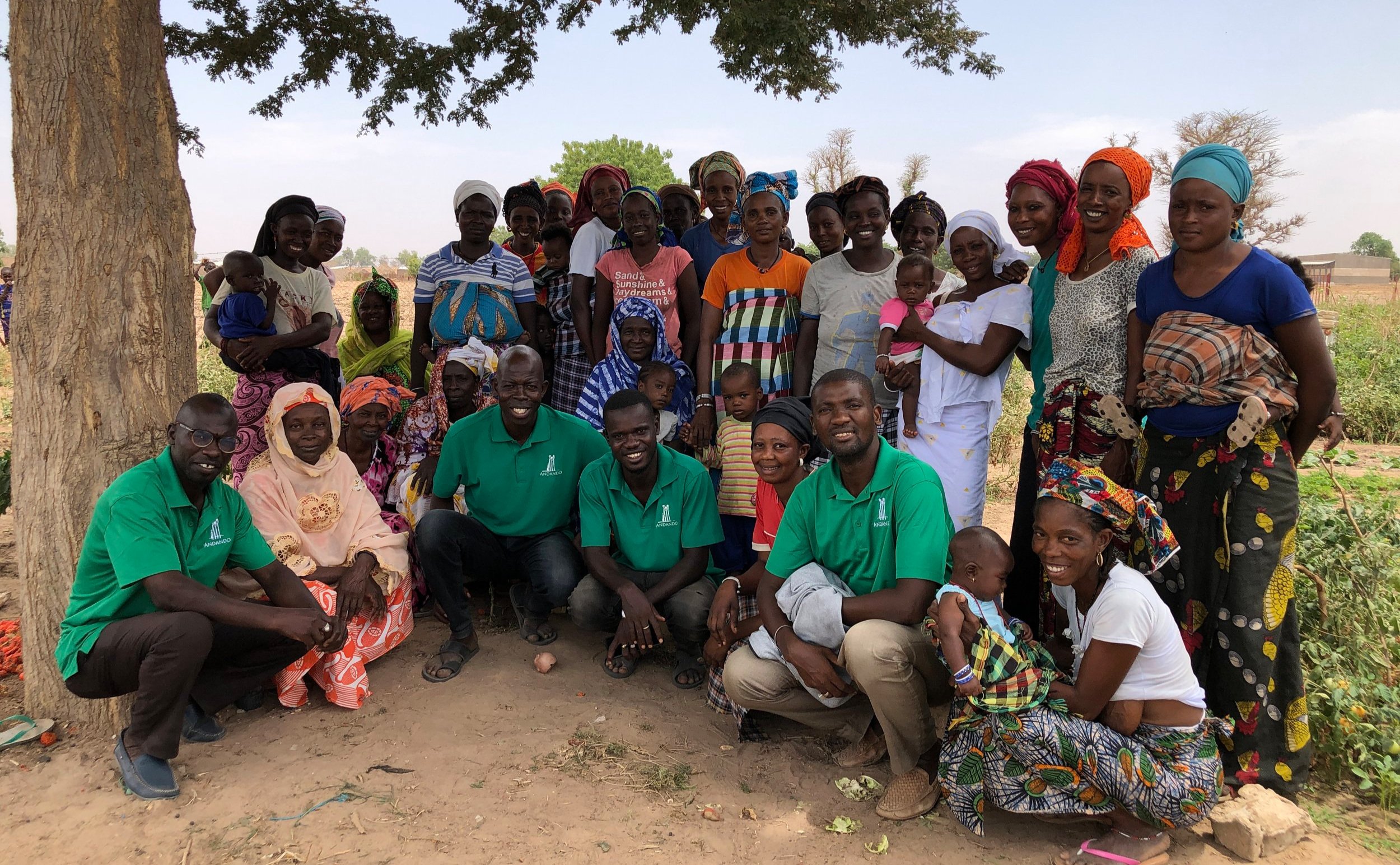
Celebrating a good lettuce harvest with some of the garden participants in Keur Ngor.

My name is Garrison Harward and I could not be prouder to be speaking to you as Andando’s new Executive Director. After nine years of dedicated service Lewis has decided to move up to join our Board of Directors so that he can stay stateside and spend more time with his family. This is a big shift for both of us and for the organization as a whole, but Andando isn’t skipping a beat! Our programming is more ambitious than ever, and we have even bigger plans for the future!

I’d like to take this opportunity to remind all of us about the incredible impact that Andando has achieved under Lewis’ leadership. This year we are constructing five women’s cooperative gardens bringing our total to 38 with over 3,500 women participating in the program.

Visiting one of the market gardens with Boubou and Lewis in 2021. Garrison has traveled to Senegal several times providing technical trainings, formally as our Agriculture Officer.

In the past two years our gardens have produced over one million pounds of organic produce with recorded profits of over $250,000! By the end of this year we will also construct our 14th health post. Together these posts see an average of over 10,000 healthcare visits each year. Lastly, we are finishing four classrooms in Podor and the final two classrooms of the brand new Keur Soce High School for a total of 60 classrooms constructed across 16 schools, benefiting over 5,000 students annually. WOW!
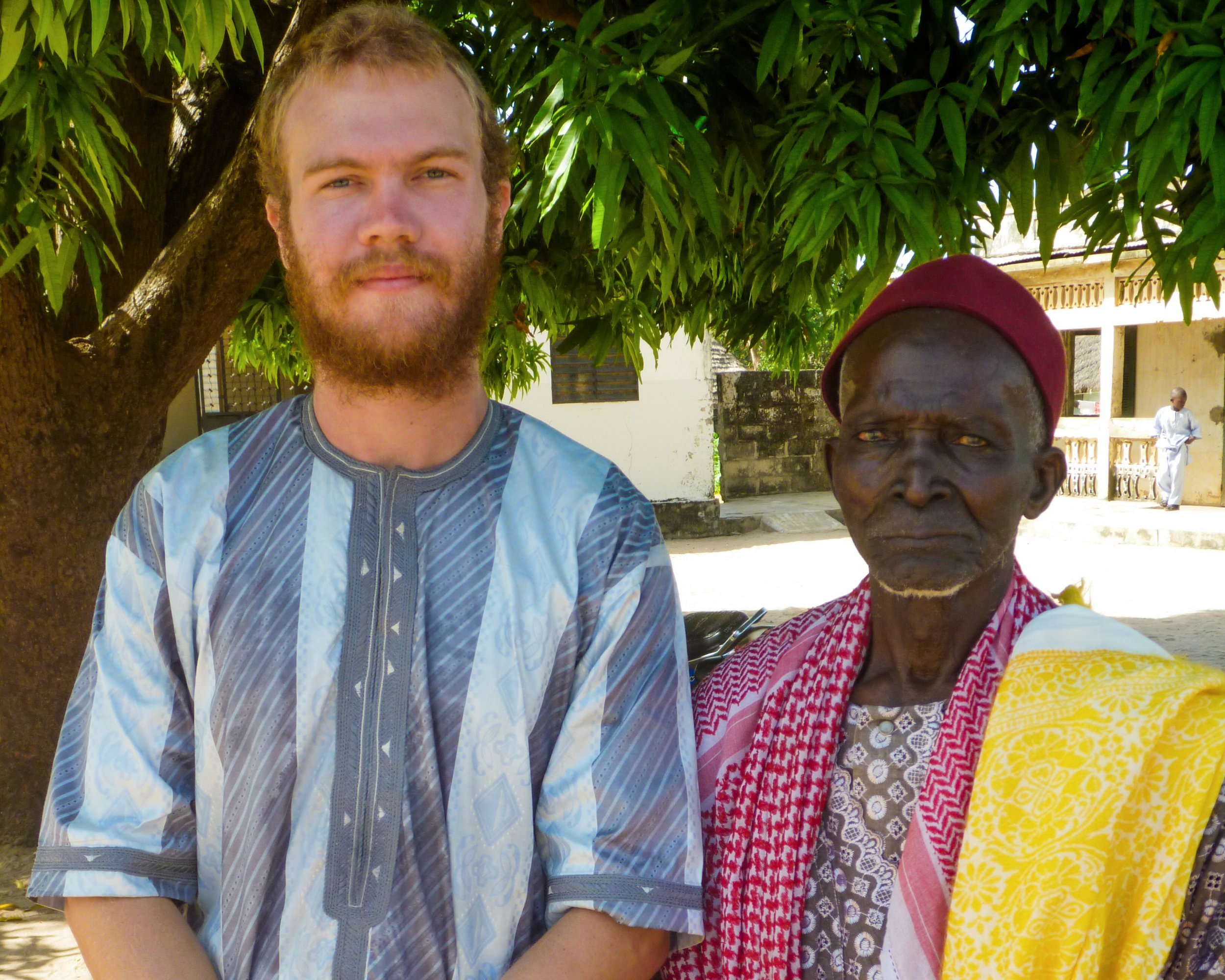
Garrison served in the Peace Corps in Senegal from 2010-2012, here he is pictured with the chief of the village that hosted him.

I have been with Andando for a little over two years and I am still constantly astounded by what this organization has done, and is doing, every day in Senegal. I lived in Senegal as a Peace Corps volunteer from 2010-2012 near Keur Soce, and I am so grateful that Andando has afforded me the opportunity to reconnect with this place that I love so dearly.

I am proud of what we have already accomplished, and I’m so excited to see how far we can go with this firm foundation beneath us. Feel free to reach out if you would like to know more about our programming or to find a personal connection to how your contribution is making a meaningful impact in Senegal.

-Garrison Harward
Executive Director
Garrison@Andando.org

We Have Fish!

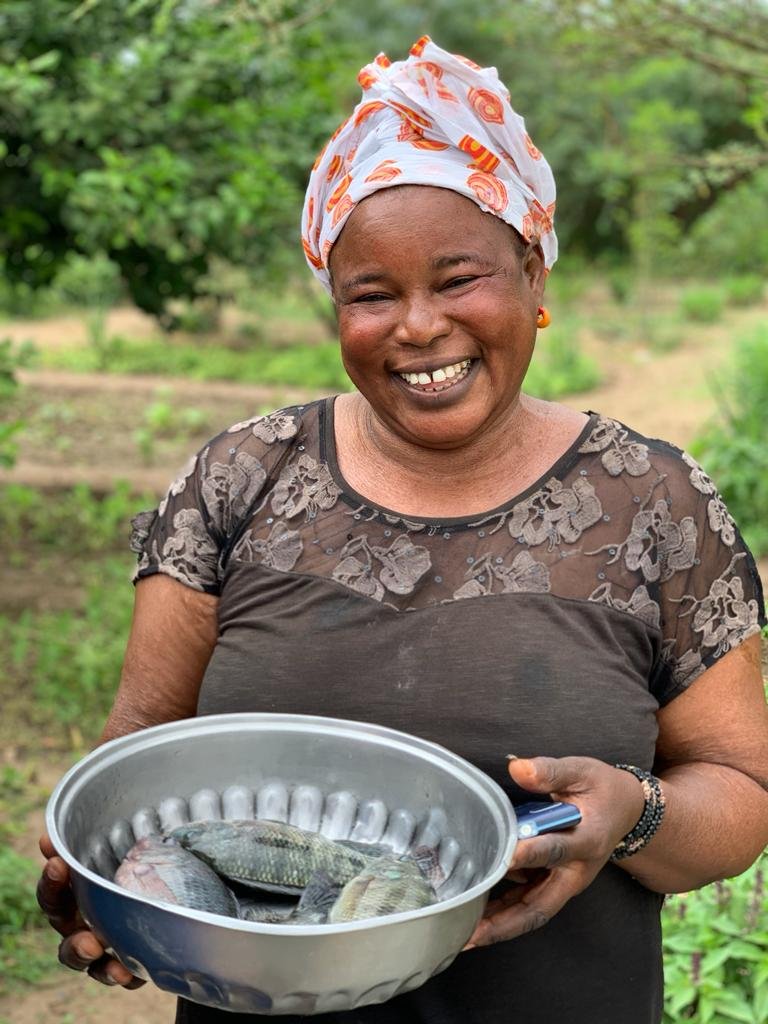
A basket full of fish after a harvest complimented by a hearty lettuce harvest, grown using fish water.

It is our absolute pleasure to report that our trial fish farming project is thriving! Earlier this year we reported on the beginnings of this process, but to be honest we really didn’t know how it would turn out. There were challenges but overall, our team has done a tremendous job and we couldn’t be prouder of them and the women in the gardens for picking up such a unique and difficult new skill! 

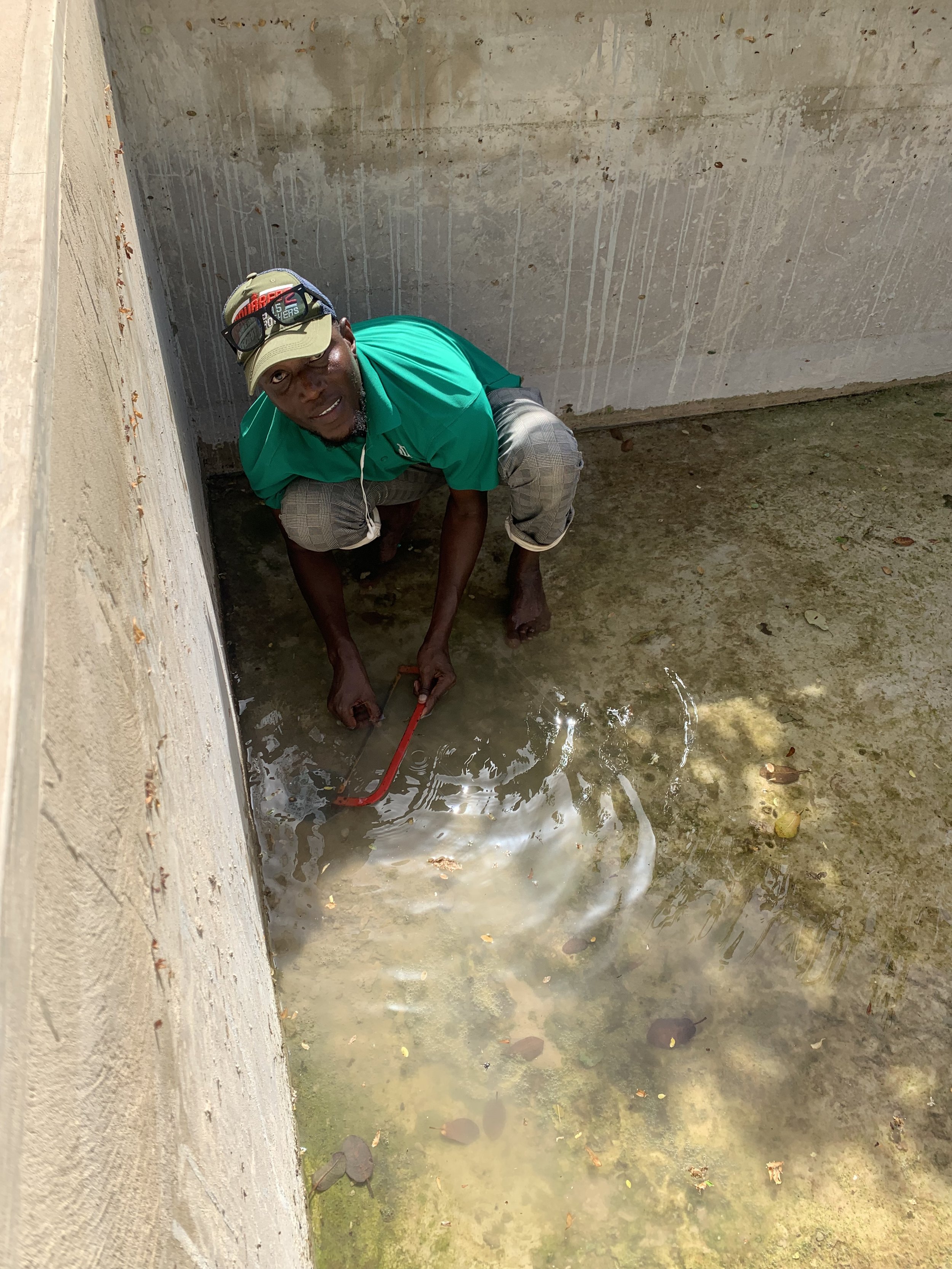
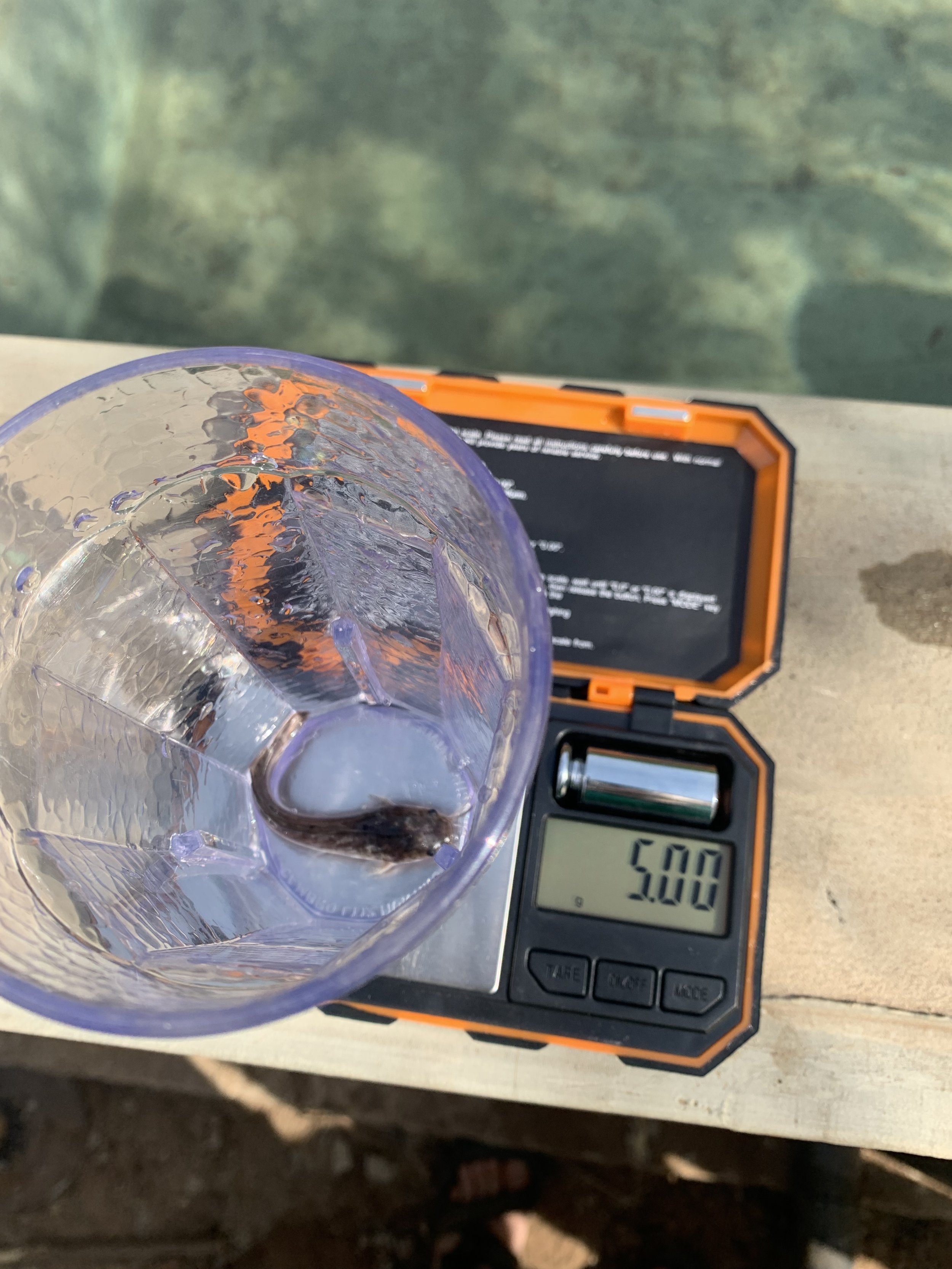
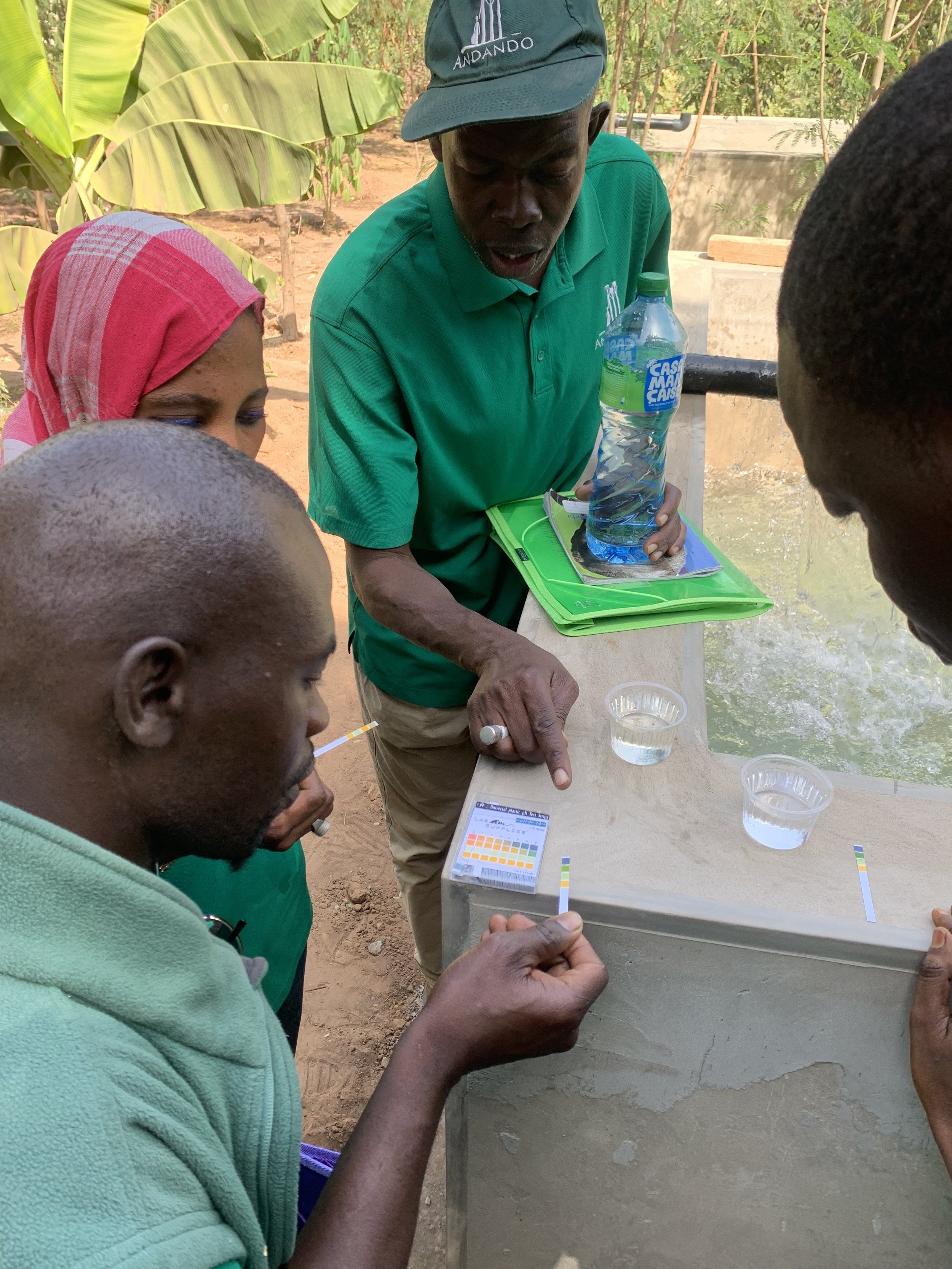
During a hands-on training, participants in our aquaculture project learn how to assess fish for health and growth.

On a recent visit we got to witness the first fish harvest and the results are incredible. There is nothing quite like seeing buckets of fish (over 250lbs) coming out of our gardens in the middle of the desert. It was a wonderful scene of excitement, singing, dancing, joking, everything you would expect at the culmination of a challenging but successful project. Here’s some of what the women had to say that day:

“We used to work hard before but now with the fish program, we really see ourselves succeeding in the garden.”

“Look at the eggplants!  We noticed for three years we haven’t had eggplants, but now we do because of the fish water.”

“There is a start, but there is no end to our happiness.”


Garden participants introducing the first new fingerlings produced in our own fish tanks.

It is hard to describe the importance of fish in Senegal and how meaningful it is for the women to be able to provide fresh, healthy fish for their families. This is of course the first and most noticeable benefit but the women also remarked on how watering with the fishpond water is improving vegetable production across the whole garden as well. Indeed, our aquaculture gardens saw an average 42% increase in individual profits this year compared to the same 6-month period last year! WOW!

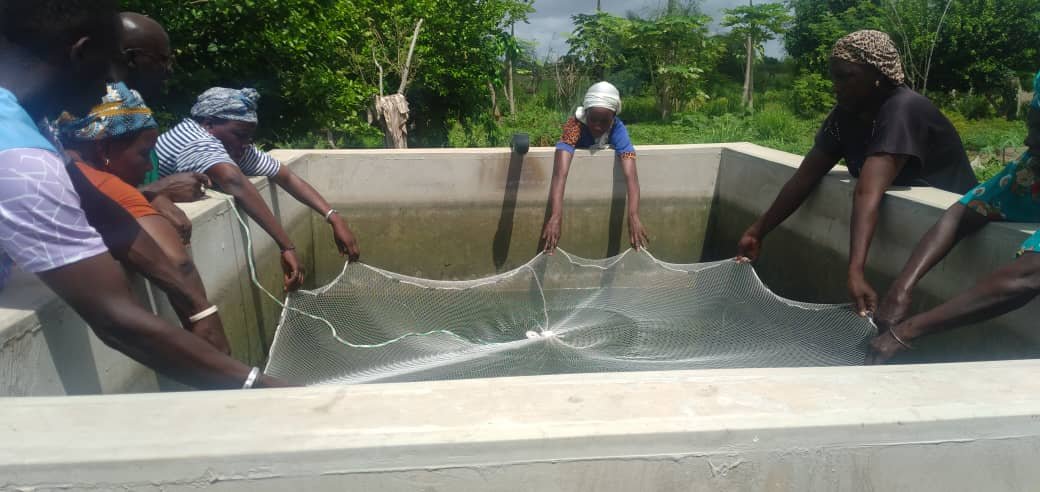
During a hands-on training, participants in our aquaculture project learn how to harvest fish from the basins.

All four gardens that participated in this pilot program are continuing to raise fish and now that the tilapia are successfully reproducing in the basins, we are very close to having self-replicating, sustainable production that can continue for years to come.

Meet Badiane, Garden Technician

Continuing in our series, we would like to introduce you to another member of our team who works on the ground in Senegal every day to build resilient, thriving communities. We think they are pretty amazing and are sure you will agree. This is the tenth in a series introducing the people that make it all possible. (Click here to see others in this series.) Meet Badiane, Garden Technician.

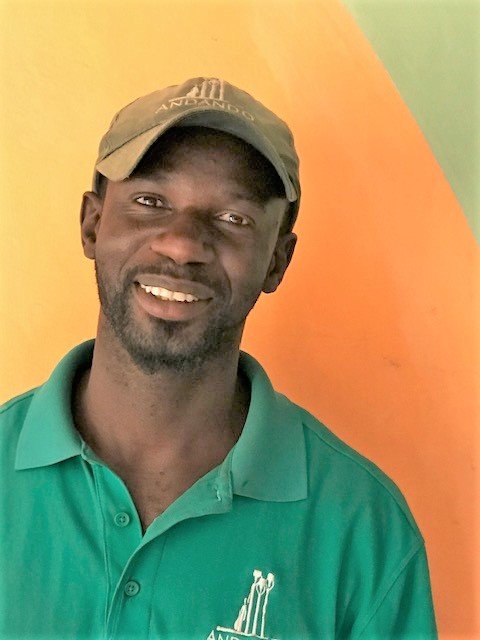
Badiane joined the Andando team in 2016..

Baba Khady Badiane, who goes by Badiane (pronounced Bye-jon) joined our team in 2016. He comes from a large family and grew up in Guindor, about 8 kilometers (5 miles) from Keur Soce.

Unfortunately, Badiane had to stop attending school after junior high because his family did not have the means to continue sending him. This did not deter Badiane however, he proactively sought out every opportunity to continue learning and advancing himself.

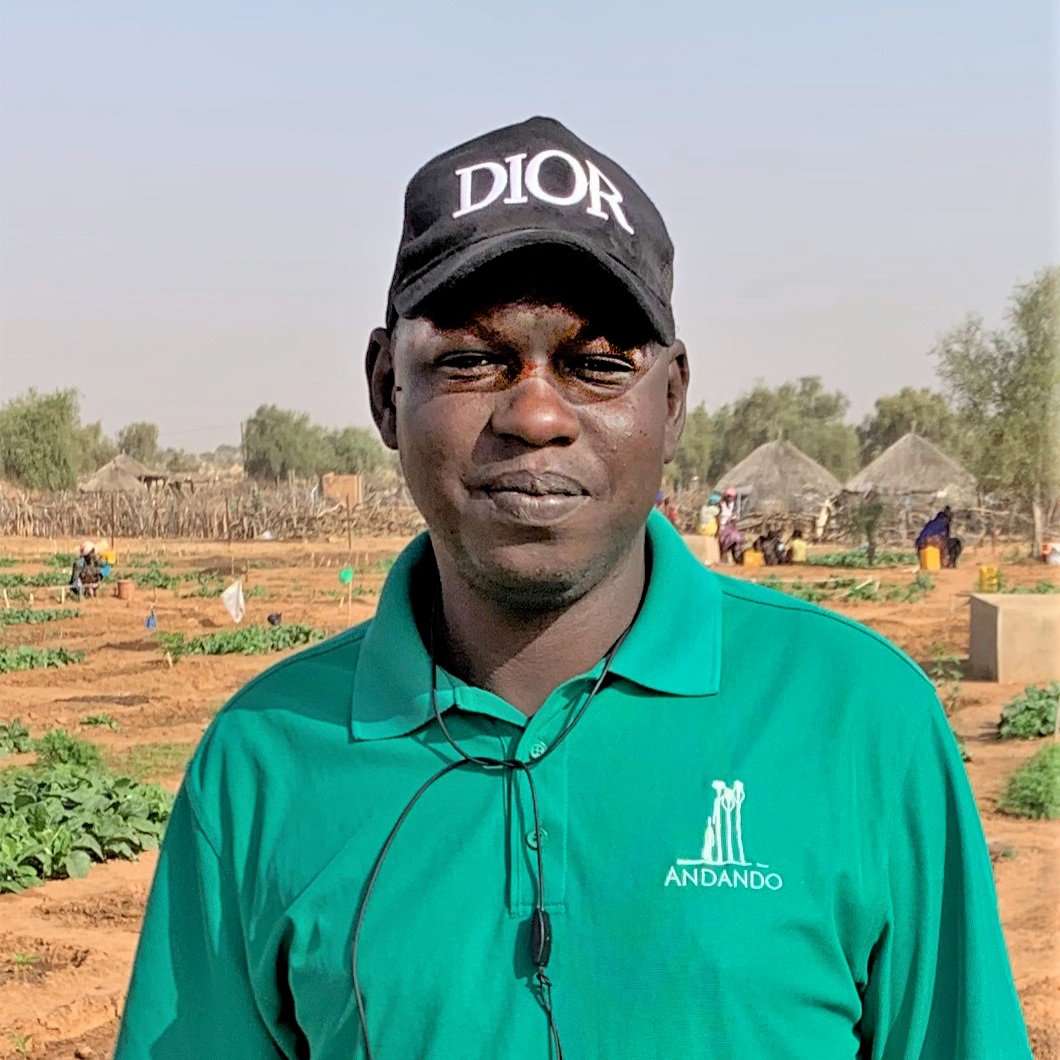
Badiane has started several of our gardens from the ground up, and is a vital resource to the communities we serve.

He started working with another NGO (non governmental organization) in Senegal, called APROFES. It was here that he received formal training in agriculture techniques and seed saving. While this work was voluntary and did not provide Badiane an actual income, the knowledge he gained from the experience propelled his career in agriculture forward. He also received a diploma from USAID in food preservation and drying which is especially helpful when there is an abundance of crops.

Badiane holding packets of local heirloom seeds as part of a new seed saving program.

Badiane joined our team as our second Garden Technician and has been responsible for starting many of our gardens in the Keur Soce region. He is excited to lead a new seed saving program in the gardens.

“Agriculture is a really nice job. If you are on it, you will see results. Really you will have good health. Also you will solve almost all your problems.”

- Badiane, Garden Technician

Standing outside his home, Badiane is pictured with some of the members of his family in the village of Guindor.

Badiane is the father of nine children, the oldest is 20 and the youngest is three years old. They live together in Guindor, which is about 20 minutes by moto (scooter) from the Andando headquarters in Keur Soce.

When he is not working Badiane manages the family chickens and sheep. He also loves futbol (soccer) and was a very good goalie when he played in school.

Your support enables Badiane to help his fellow citizens. Thank you for investing in their future!

Click here to meet other staff.

Battra Ndialla Market Garden

The Women’s Collective of Battra Ndialla Market Garden after their first harvests in June.

Off the main road to Keur Soce sits a small village called Battra Ndialla. Here families work hard during the short three-month rainy season to grow and harvest staples (such as millet, squash, and peanuts) and store them for future consumption. Families struggle with food insecurity here because this rural agricultural area lacks other economic opportunities and climate change is making subsistence farming more difficult and less profitable.

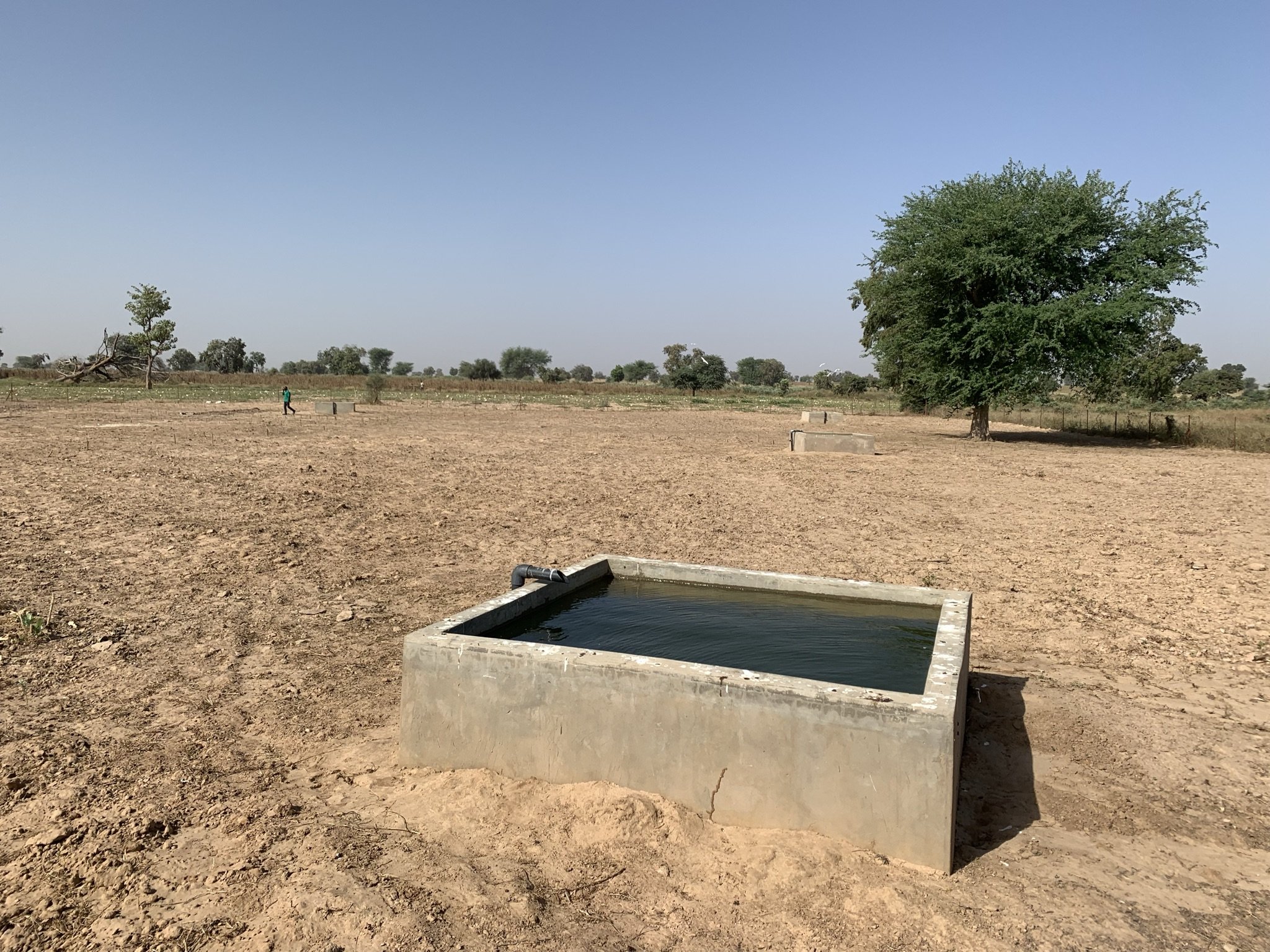
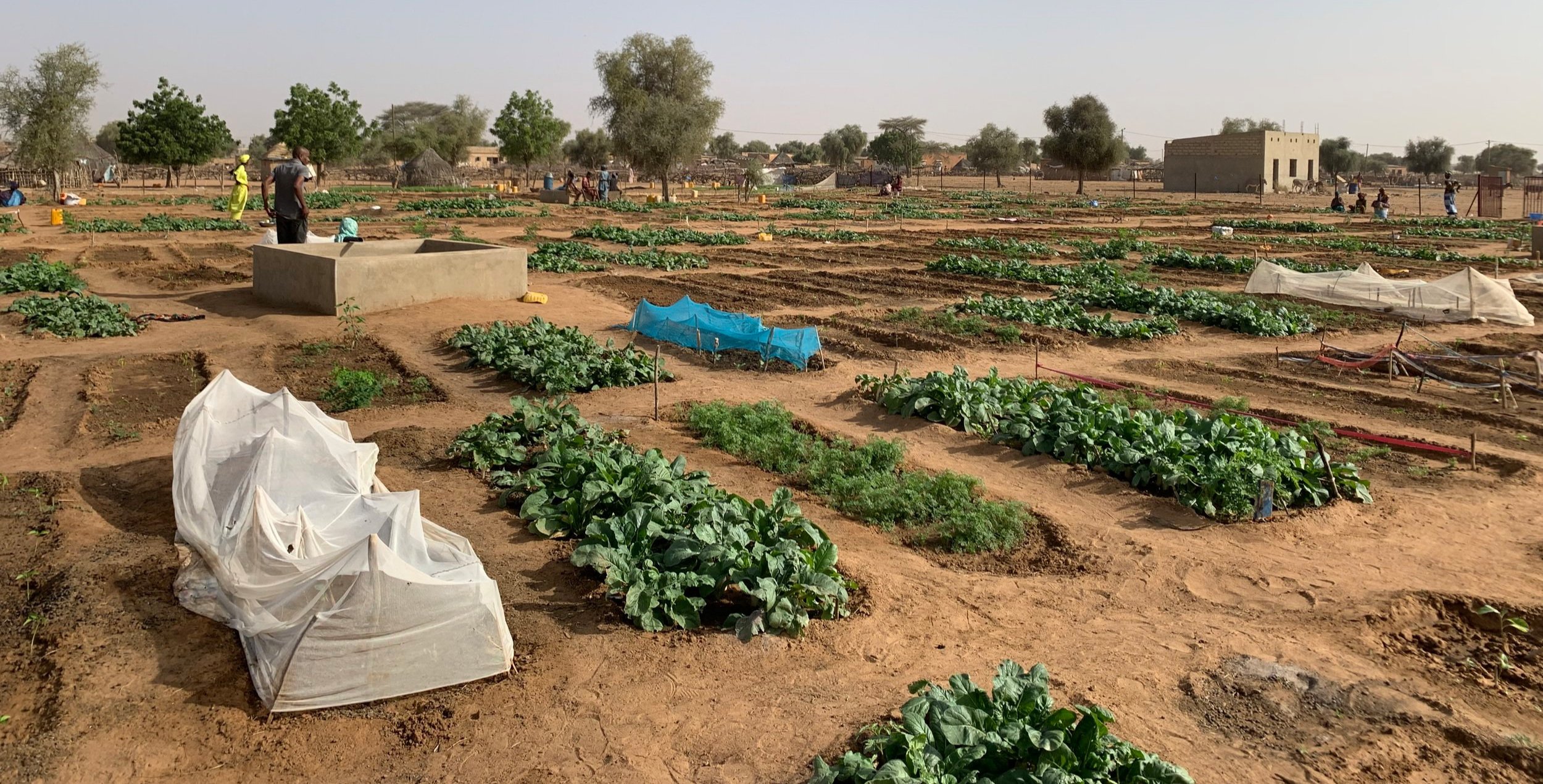
With the installation of a solar powered pump, the existing well is used to water the market garden, providing nutritious vegetables for all in the community.

In the middle of the village sits a simple well that has faithfully supplied all the water needs of the community for years and years. With a rapid refresh rate, this well and community were well suited for a market garden, they just needed a little help to get it started. Thanks to a grant from Vibrant Village Foundation, Altrusa International, and Altrusa Club of Albany the community of Battra Ndialla got their garden!

Signing the Memorandum of Understanding with the community of Battra Ndialla.

In October of 2021 we formalized our partnership with the community leadership and the Women’s Collective who would ultimately take on the day-to-day care of the garden.

Construction began shortly after that and we took this time to assemble the women’s leadership team and start the initial garden training with one of our Garden Technicians, Babacar Sow.


While they waited for the watering basins and solar pump to be installed the women prepared the grounds and identified their family plots inside the garden. Supplies arrived including wheel borrows, watering cans, rakes, and cultivation tools. Seeds also arrived and with the help of Babacar (Garden Technician) they selected their first crops, prepared compost to enrich the soil, and anxiously awaited the day the water would be turned on.

BEFORE: The water basin is installed and the barren ground is ready to be cultivated.

AFTER: You can see the water basin in the center surrounded by food producing plants.

They didn’t have to wait long, just two months later – December 2021—all the construction was complete and the solar pumps effortlessly brought fresh, clean water to the garden! Senegal has an abundance of sun and a warm climate which makes year-round food production possible. Already the women have harvested over 12,000 pounds of produce! Of this about 25% is used to feed their families and the extra 75% is sold in local markets, increasing household income by 25%. Our technicians are on-site daily, providing training and guidance for all participants ensuring they have the tools they need to succeed.

This garden is very important for us. We gain a lot from it. When we harvest we can eat and sell. We are no longer worried for vegetables; we have them all!
— Khady Sow, Garden Participant, Battra Ndialla

This is just the start for Battra Ndialla. In addition to vegetables such as tomatoes, eggplant, okra, and lettuce they are also growing hearty root vegetables like carrots and turnips. Fast growing herbs such as mint are a cash crop and sell quickly in the market.

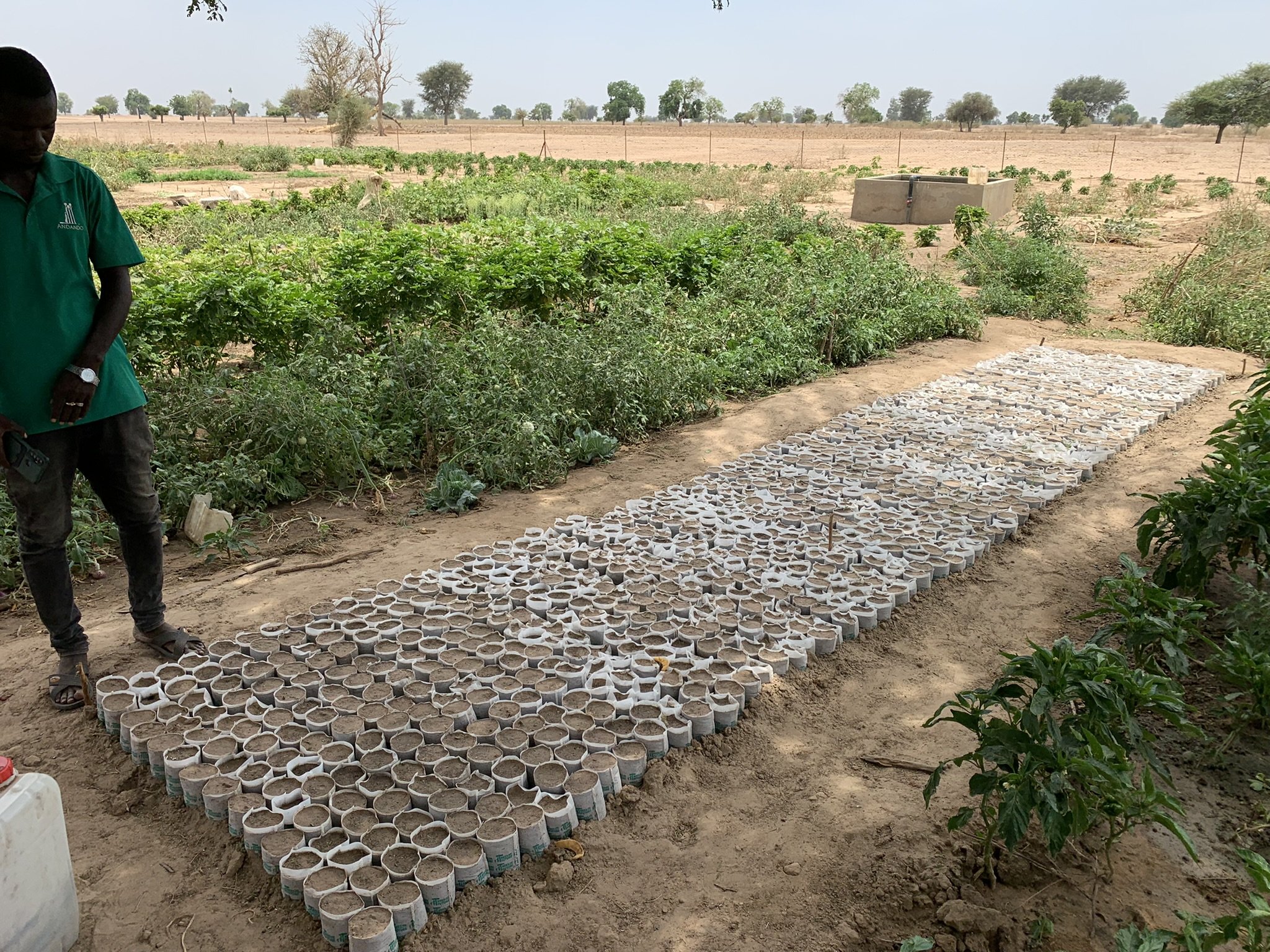
Live-fencing trees are started in planting sheaths inside the garden. These trees will replanted around the perimeter of the garden to protect it from wind and animals.

The women are also planning for the future by planting live-fencing that will reach maturity before the existing chain link fence deteriorates in the harsh elements. This live-fence will protect the garden from the strong drying winds as well as from roaming cattle, goats, and sheep that can level a garden in a short time. Soon the women will start planting fruit producing trees such as papayas and mangoes which will not only provide delicious food, but also fortify the soil and protect from it from erosion.

“Since this garden game here. We are all happy. We gain money through the garden, we sell some and cook some.” - Binta, Garden Participant, Battra Ndialla

We celebrate with Battra Ndialla Women’s Collective for their great success this first year, and we look forward to their continued leadership, growth, and creativity to strengthen their communities. Thank you to everyone who made this possible.

Meet Seynabou, Garden Technician

Continuing in our series, we would like to introduce you to another member of our team who works on the ground in Senegal every day to build resilient, thriving communities. We think they are pretty amazing and are sure you will agree. This is the tenth in a series introducing the people that make it all possible. (Click here to see others in this series.) Meet Seynabou, Garden Technician.

Seynabou joined the Andando team in 2019..

Seynabou (pronounced Say-nə-boo) Ndao joined our team in 2019. She comes from a large mixed family and is the oldest of her immediate siblings, with two sisters and three brothers. She grew up in the village of Sagatta Djioloff, in the northern region of Senegal, near Podor.

Joking around with some of her siblings, Seynabou is pictured with white head scarf.

Seynabou as a young girl, approximately six years old.

Seynabou attended both elementary and junior high school in her village where she was always among the top students. However, there was not a high school in her village, so she moved in with her aunt and uncle nearby in Louga where she excelled and completed high school.

Drawn to the sciences, Seynabou continued her education at University Cheikh Anta Diop in Dakar where she studied physics and chemistry. Her program included a six month internship, and she was given a list of partner businesses and nonprofits to choose from. This is how Seynabou first heard about Andando, and we were her first choice for her internship!

At university with some of her classmates (Seynabou is second from left with blue scarf).

Moving to Keur Soce was a great adventure: the way of life was different, the food was different, the ethnic groups and languages spoken in rural villages were different. But that didn’t stop Seynabou. She made quick friends with the staff and garden participants and became a great asset to the team.

After completing her internship and graduating from university, we asked if she would continue on with us as a Garden Technician --she said yes!

Testing out some equipment with fellow interns. Seynabou is center.

What attracted me to the women is the way they integrate themselves, the familiarity. I am free, and I really enjoy working with them.
— Seynabou Ndao, Garden Technician

Seynabou is incredibly social and loves spending time with people. You might find her displaying some of her gymnastics skills. She’s also a bit of a jokester and will perform comedy bits much to the amusement of others.

Seynabou loves gymnastics and was on her high school team. She has been known to give a special performance in the villages from time to time.

Building lasting relationships with the garden participants is very important to Seynabou. She is pictured here with a baby who was named after her.

Your support enables Seynabou to help her fellow citizens. Thank you for investing in their future!

We are excited and honored to introduce you to more of our team and share their hope for the future with you. Thank you for your support!

Click here to meet other staff.

From the Team - July 2022

A rare moment when three of our US-based staff (Lewis, Garrison, and Crystal) are in Senegal at the same time.

We had the rare pleasure of having three of our US-based staff in Senegal at the same time! This allowed us to dive deep with our team on the ground there and make BIG plans for the future.

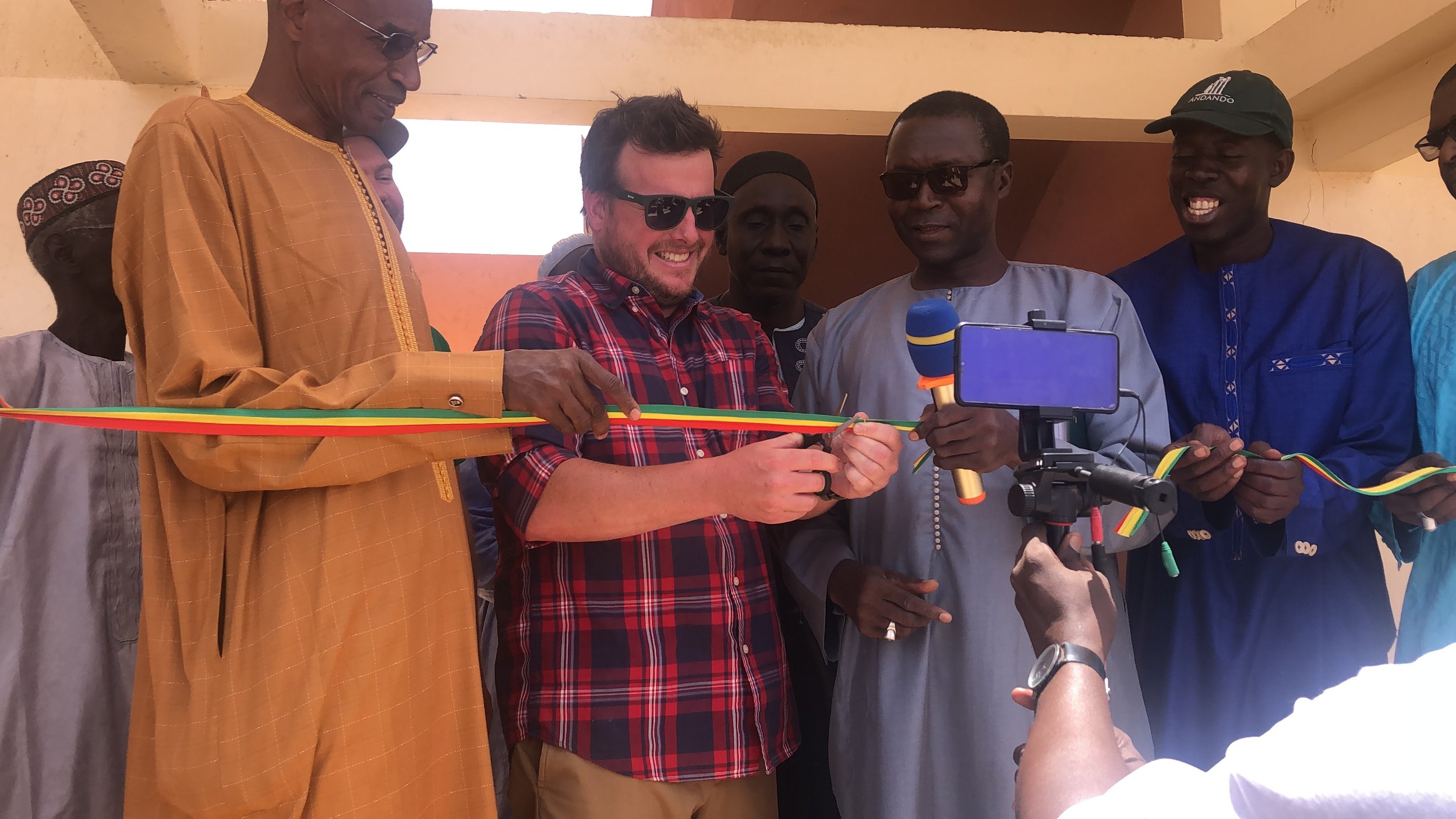
We were honored to help cut the ribbon at the official opening ceremony for Keur Soce High School!

Keur Soce High School is finishing up its first year of classes, and with enrollment increasing we finalized plans with the administration to construct an additional two classrooms to meet their current need. We also discussed the possibility of adding a school garden in the future with an attached science classroom to help boost their science curriculum.

After only six months since launching the aquaculture program, the fish are big enough to harvest. Each of the pilot gardens received advanced training, which will help them move towards self-sufficiency and reap the maximum benefits from the project.

In the gardens, we got to witness the first fish harvest from our pilot aquaculture program! The women and technicians have worked so hard to learn this new skill, and we couldn’t be happier to celebrate their success with them.

Fresh fish is hard to come by in these arid regions of Senegal. But now garden participants enjoy the nutritional benefits of fresh fish while also seeing their gardens bursting through the use of water from the fish ponds for their plants.

In Podor we met with local leaders to plan a permanent tree nursery which will allow us to grow thousands of beneficial trees where they are desperately needed.

These trees will become live fencing that will protect gardens from animals and wind. Over time metal fencing deteriorates, but live fencing is sustainable and provides long-term protection while helping to improve the soil.

These are just a few examples of the amazing things our team is working on, and we are so excited to see these programs continue to grow and thrive.

From all of us, “Jéréjëf!” – Thank You!

Meet Garrison, Executive Director

Garrison joined the Andando team in 2021.

Garrison joined the Andando team in 2021.

Continuing in our series, we would like to introduce you to another member of our team who works hard to build resilient, thriving communities in Senegal. We think they are pretty amazing and are sure you will agree. (Click here to see others in this series.) Meet Garrison, Executive Director

_C101395.jpg

Garrison holding a band trophy with this parents.

Garrison Harward joined the Andando team in 2021 as our Agriculture Officer. He grew up in the small town of Ojai, California and caught the gardening bug early from his Mom and Grandpa. When he wasn’t digging in the dirt Garrison spent most of his time in marching band, choir, and theater groups. The thrill of performing led him to California State University Chico where he studied theater and met his wife Hannah; they just celebrated 13 years together.

Hannah and Garrison at their wedding.

Hannah and Garrison at their wedding.

While Garrison is our newest state-side addition to the Andando Team he first met Andando 10 years ago during his service in the Peace Corps in the Fatick region of Senegal. 

During his time there (2010-2012), Garrison lived in the rural community of Dassilame Serere (approx. 40 miles SW of Keur Socé) where he worked with farmers on a variety of agricultural projects.  The Serer people are an ethnic minority in Senegal. One of the last projects Garrison worked on with his community was a water and sanitation project funded by Andando and during a recent visit back there he was thrilled to see that the infrastructure they built is still functioning and providing a real benefit for the community.

In the village of Dassilame Serer, Garrison made many life-long friends during his service with the Peace Corp.

In the village of Dassilame Serer, Garrison made many life-long friends during his service with the Peace Corp.

The Serer people are an ethnic minority in Senegal and getting to learn about their history and culture along with their incredible language is one of the greatest gifts I took away from my service.
— Garrison

After returning home to the United States, Garrison and Hannah moved to New York City where Garrison worked as a Head Production Electrician working in Fashion lighting and has worked for almost every major brand in the industry along with countless theater productions including the initial run of Hamilton.

Garrison is also a Head Production Electrician working in Fashion lighting and has worked for almost every major brand in the industry along with countless theater productions including the initial run of Hamilton. He is pictured here with fellow team members.

Garrison (pictured right) also was a Head Production Electrician working in Fashion lighting and has worked for almost every major brand in the industry along with countless theater productions including the initial run of Hamilton. He is pictured here with fellow team members.

One of Garrisons’ proudest accomplishments is founding a free community farm on his block in Brooklyn, growing free, nutrient dense, organic food for the community. He is passionate about helping farmers (both on his block and in Senegal) to sustainably improve the land while increasing production and the nutritional benefit of the food.

Garrison was recently featured as the New Yorker of the Week.  Click on the image above to watch a short video.

Garrison was recently featured as the New Yorker of the Week. Click on the image above to watch a short video.

In 2022 Garrison accepted the position of Executive Director when the current director, Lewis Kiker, moved up onto the Andando board. In his spare time you can usually find Garrison playing Petangue (similar to bocce ball) or snuggling his dog, Gabby.

Garrison presenting at the annual Auction Fundraiser in October 2022.

Garrison provides practical, hands-on, training and support to all of our Garden Technicians in  Senegal.

Garrison provides practical, hands-on, training and support to all of our Garden Technicians in Senegal.

Your support enables Garrison to help families in rural Senegal. Thank you for investing in their future.

We are excited and honored to introduce you to more of our team and share their hope for the future with you. Thank you for your support!

Click here to meet other staff.

A Garden: More Than the Sum of Its Parts

The women of Belel Kelle village have transformed the land from a desert to a lush and thriving garden.

It is always very satisfying to see a beautiful green garden spring seemingly out of nowhere. It’s easy to see the initial benefit, but it can be difficult to understand the other positives that a garden brings to a community. Every once in a while, however, we get a glimpse into the deeper value these gardens bring to their communities.

Belel Kelle is one of our newest gardens, near Senegal’s northern border with Mauritania. One of the hottest regions of the country, it’s hard to believe that anything could grow here. To say that people here are tough is an understatement.

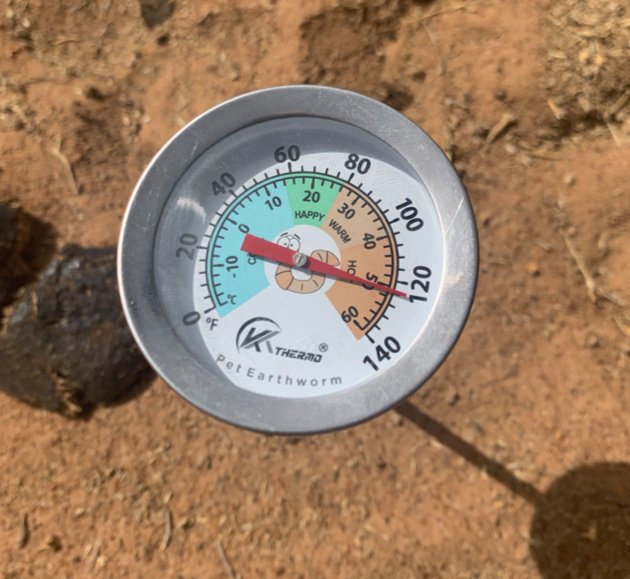
One of the hottest regions in the country, this thermometer shows the ground temperature at over 120 degrees F.

Most make their living as nomadic herders, traveling with their livestock for much of the year. Having a garden in a fixed location is new for the village, but the women here took to it with determination, and in less than a year their garden is yielding harvests that rival established gardens with many more years of experience. It’s so successful that many of the women are choosing to stay in the village year-round rather than leaving with the men to tend the livestock!

The women of Bele Kelle took to the garden with determination, and in less than a year their garden is yielding harvests that rival established gardens with many more years of experience.

Because there are no resources during the dry season, the majority of the population moves to feed their cattle, but this year, because of the garden, many children stay with their mothers to continue their studies. The school is full of students compared to last year! The garden has brought a big change in this village of Belel Kelle.
— Omar, Garden Technician

Children now stay in school rather than leaving the village with their families to tend the livestock.

We never know what changes a garden will bring or how communities will use the resources they create from it. Students staying in school is a huge benefit that we never anticipated but are thrilled to see. The people of Belel Kelle are doing a great job, and we are proud to give them the resources to forge their own path to a more prosperous future.

BEFORE: It’s hard to believe that anything could grow here - this is Belel Kelle garden before.

AFTER: In less than a year the garden is yielding harvests that rival established gardens with many more years of experience.

From the Director - April 2022

During a break between classes, students wave from the second story of Keur Soce High School where six classrooms are completed and fully furnished.

We are so encouraged by the community’s response to Keur Soce High School and look forward to another year of investment in this program. Over the past year and a half, we have completed six full classrooms, brought in desks and other equipment, and seen the building fill up with new teachers and eager students.

Madame Marone and her students in one of the new classrooms at Keur Soce High School.  She teaches Geography and French to the freshman and sophomore classes.

The school has gone from non-existent in 2020 to an enrollment of nearly 400 students, with many more coming in the next year as we continue to expand the school. There has long been a large demand for this increased access to education, and we are excited to be partnering to make it happen.

Exterior of Keur Soce High School - six classrooms are completed with over 400 students enrolled and many more coming in the next school year.

This has the potential to be an absolute game-changer not only for students in the Keur Soce area, but also for families moving forward who will see their children go on to bigger and better things with this huge step up in opportunity. The school will continue to grow and will be more and more supported by the State, and we really look forward to seeing the generational change this institution will make. “Jerejef!” – Thank you!


Lewis Kiker, Executive Director

Meet Francois, Garden Technician

Continuing in our series, we would like to introduce you to another member of our team who works on the ground in Senegal every day to build resilient, thriving communities. We think they are pretty amazing and are sure you will agree. This is the ninth in a series introducing the people that make it all possible. (Click here to see others in this series.) Meet Francois, Garden Technician.

Francois joined the Andando team as a Garden Technician in 2015..

Francois Manga, who goes by Fara, joined the Andando team in 2015 as one of our Garden Technicians.  He was born in Thies, a large community 184 kilometers (approx. 112 miles) northwest of Keur Socé.  He comes from a big family, and enjoyed an advanced education.  He studied in Ziguinchor, which is in the southern part of Senegal (below The Gambia), often referred to as the Casamance Region. 

Keeping up with his nieces and nephews, Francois is lively and energetic.

Before joining us he had extensive experience in gardens, working in the Mbour Garden, the Beersheba Cooperative, and finally as an intern in the Keur Moussa Monastery Garden.  We first met Francois when we bought mango, lemon, and guava trees from Keur Moussa Garden for inclusion in our own gardens.  Once he completed his internship there, he joined the Andando team.

In addition to providing training in the gardens, Francois also assists with local farmers participating in the microloan program.

When you give, you have to give wholeheartedly. When you work, you have to give everything to succeed.

I enjoy learning how to manage the gardens and handle problems as they arise. I have enjoyed working for Andando very much and am very proud to be part of the team.”
— Francois Manga, Garden Technician

A quick learner, Francois started with one garden and is now managing three.  He works directly with nearly 350 women, training them and giving them support so their gardens can  flourish.  When asked, he says his favorite produce is beetroot!

Chatting with garden participants at their produce stands in town, where they sell their extra produce increasing their household income by 25%.

An avid futbol (soccer) fan, you will find him cheering on the Senegal Lyons (who recently won the Africa Cup of Nations tournament for the very first time) as well as Manchester United. 

Francois with his Boy Scout Troop (he is fourth from the right, back row.)

He was a member of the local Boy Scouts and loves to play with and teach his nieces and nephews; he cares deeply for his family.

Your support enables Francois to help his fellow citizens. Thank you for investing in their future!

We are excited and honored to introduce you to more of our team and share their hope for the future with you. Thank you for your support!

Click here to meet other staff.

“Before I could not have a big farm. Now I can!”

Mamadou Senghor with his wife and some of the multiple generations that live in their home.

Mamadou Senghor is a father, grandfather, and farmer in Fas Toucouleur.  His village is 3 miles from the main road and historically has limited access to electricity and running water.  As the eldest son, he is responsible for the care of everyone in his household. (In Senegal it is common for multiple generations to live together on a family-owned piece of land.)

In one of Mamadou’s fields, he grows corn, millet, and peanuts.

A long-time farmer, Mamadou struggled, as many in this area do, to get the supplies needed at the start of the planting season.  Because of this he could not use his fields to their full potential, which limited the amount of food he could grow for his family and the amount of income he could gain from the sale of cash crops, such as peanuts.

Before I could not have a big farm. But since Andando helped me, I have increased my farm. Before I had maybe 1 hector (2 1/2 acres), and now I have 6 hectors (approx 15 acres). I have something to give to my family to eat and something to sell. We solve our economic problems and pay back the loan.
— Mamadou Senghor, Farmer

Khady, Mamadou’s wife, proudly standing outside her new kitchen.

Having a robust and diverse farm gives Mamadou security for his family.  He uses the extra income to replace the huts on their property (comprised of clay walls,  thatched roofs, and dirt floors) with more durable buildings.  Raised off the ground with concrete floor and walls, and topped with a metal roof, his family no longer suffers during the rainy season.

Mamadou shows the remaining clay hut; all the rest have been replaced with concrete structures with metal roofs.

Having a robust and diverse farm gives Mamadou security for his family.  He uses the extra income to replace the huts on their property (comprised of clay walls,  thatched roofs, and dirt floors) with more durable buildings.  Raised off the ground with concrete floor and walls, and topped with a metal roof, his family no longer suffers during the rainy season.

I thank the supporters of Andando and pray for them...because we know how much you help us, and how you have lifted us up.
— Mamadou

There are many more farmers like Mamadou who would benefit from a little boost to improve the quality of life for their families. You can make a difference, donate today.

Enjoy a Fataya (Senegalese Hand Pie)

A weary traveler purchasing fataya (Senegalese hand pie) from a street vendor.

Street vendors are a welcome sight for the weary traveler. You can get a quick snack, something to drink, fresh fruit, and even sunglasses from the comfort of your bus or upon reaching your final destination.

Fataya are a common offering from vendors. A savory street food, these delicious hand-pies are commonly filled with seasoned fish, onions, along with generous herbs and spices. Easily modified to fit your tastes, you can substitute chicken or even seasoned chickpeas for the fish. For the more brave eaters, top with kaani sauce (a hot pepper sauce often made with Scotch Bonnet peppers).

Photo Credit: Jolof Cooking

Fataya Recipe:

Dough

  • 2-3 cups flour

  • 1/2 tsp salt (more or less to taste)

  • 2 tsp baking powder

  • 1/4 cup oil

  • 1 egg

  • 1/2 cup water

Filling:

  • 2 TBS oil + additional oil for frying

  • 1/2 onion, finely chopped

  • 1 pound ground meat (white fish, chicken, or substitute vegetarian option)

  • 1-2 Maggi cube (or sub bullion to taste)

  • 2-3 cloves garlic, minced

  • 2 TBS parsley, fresh

  • 1 TBS basil, fresh

  • 1 TBS cilantro, fresh

  • 2 TBS green onion, finely chopped

  • jalapeno, chopped (optional)

  • salt and pepper

Instructions:

  1. Combine the 1 1/2 cups flour and remaining dough ingredients in bowl.

  2. Stir in as much of the remaining flour as you can, and kneaduntil you have a smooth dough (adding more flour as needed - approx 8-10 min).

  3. Set dough aside and let rest, covered.

  4. In a large skillet or pan heat oil, add onion and meat - stirring frequently until meat is nearly cooked.

  5. Add remaining ingredients and continue to cook until meat is cooked all the way through.

  6. Roll dough into 3 inch round circles (approx 1/8 inch thick). Spoon a small portion of filling onto middle of dough, you want to leave enough dough to close the circle.

  7. Fold the dough over to form a half circle and seal by pressing on edge with a fork.

  8. Fry in extra oil until the outside is golden brown.

Enjoy!

Meet Omar, Garden Technician

Continuing in our series, we would like to introduce you to another member of our team who works on the ground in Senegal every day to build resilient, thriving communities. We think they are pretty amazing and are sure you will agree. This is the eighth in a series introducing the people that make it all possible. (Click here to see others in this series.) Meet Omar, Garden Technician.

Omar joined the Andando team as a Garden Technician in 2017..

Omar Ba is the oldest in his family, with one brother and two sisters. He grew up in Keur Guiran, a community just next to Keur Soce.

After completing high school, Omar would walk past the Andando market gardens on his way to work or running errands. He was very interested in what he saw:

I passed by the gardens often and was very impressed with what was happening. I wanted to be a part of it.
— Omar Ba, Garden Technician

By providing hands-on training, Omar supports the women working in the gardens with practical and accessible skills and knowledge.

He visited the gardens more often and developed a relationship with the Andando staff. In 2017 he joined our team as a Garden Technician and was one of the first technicians to relocate to the northern region of Podor when we launched gardens there in 2019.

I enjoy the challenge of learning agriculture in the new region and new context. I am very interested in passing my knowledge onto the women that are working, and when this happens, I consider it a major success.
— Omar

Sharing in the joy of a bountiful harvest, Omar cultivates unity in his gardens.

When he’s not working you will find Omar on the futbol (soccer) field. While everyone in Senegal seems to be exceptional players Omar tells us, “I am definitely the best futbol player on the Andando staff, and I am even the most talented moto driver on the staff – you can call me ‘Moniteur de Moto’ - The Moto Instructor!”

Nicknamed “Moniteur de Moto” (which translates to Motorcycle Instructor), Omar is the self-proclaimed Most Talented Moto Driver on the Andando staff.

Omar just recently married his fiance, Awa Diallo, in June. A celebration that the entire Andando staff had been looking forward to!

Awa and Omar celebrating on their wedding day, June 2021.

Your support enables Omar to help his fellow citizens. Thank you for investing in their future.

We are excited and honored to introduce you to more of our team and share their hope for the future with you. Thank you for your support!

Click here to meet other staff.

From the Director - Thank You!

Surveying a new garden site with Boubou, Senegal Country Director.

Visiting Senegal last month, I was able to see firsthand the impact that you all have made this past year. Despite the challenges, we made huge strides in our efforts with the establishment of new gardens, increased capacity at many schools, and broadened access to healthcare.

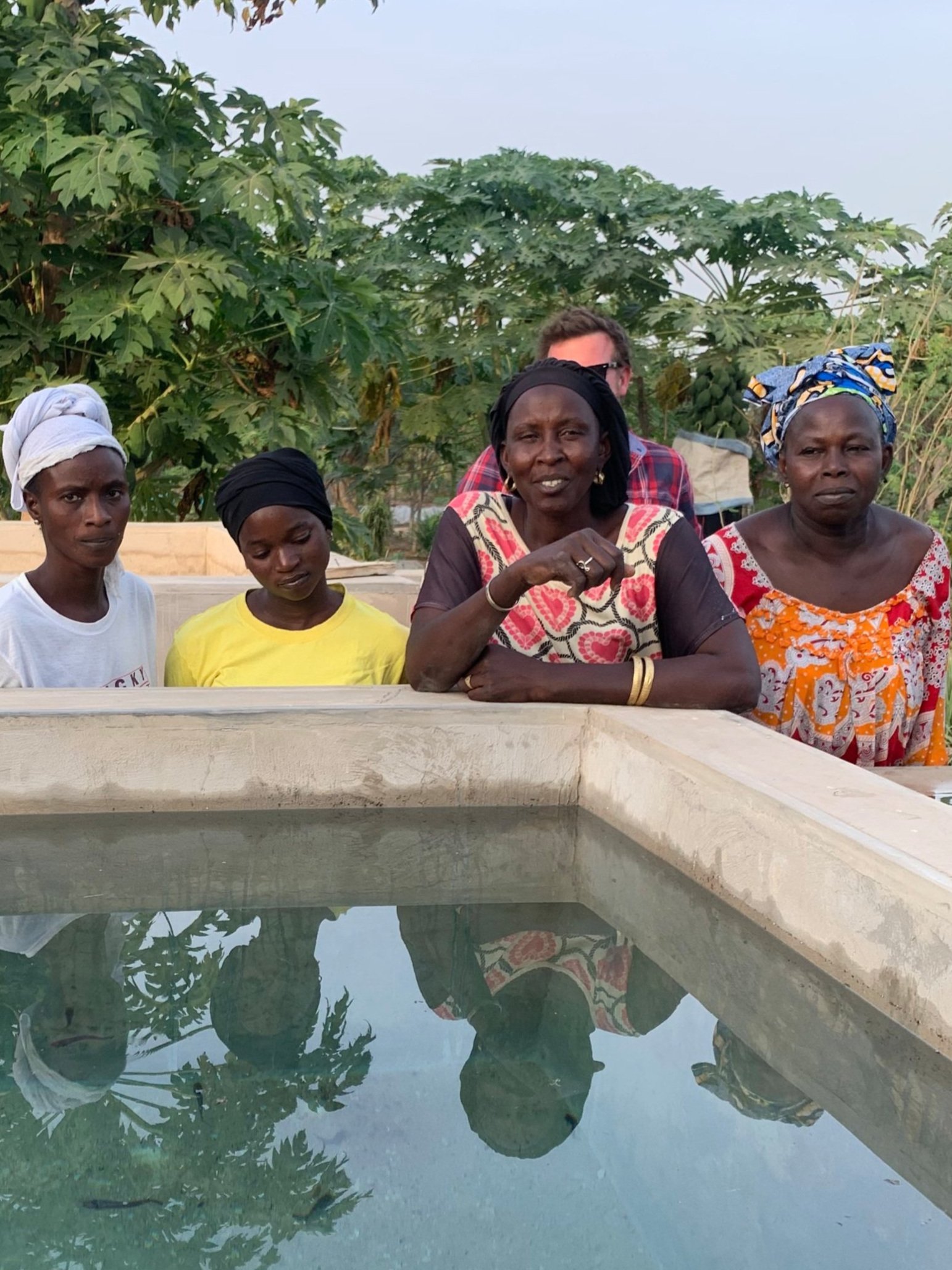
Racky (pictured center) is President of the Lamarame Market Garden, one of four gardens participating in our aquaculture trial project (see page two for more).

Last month, you heard the story of Racky (pictured above) and I had the chance to visit with her again. It is astonishing to see her strength and resilience, and there are hundreds more stories like hers. These folks are paving their own path toward a better future, and we are so fortunate to be a part of it. 

In 2022, we plan to build on these successes with five new community gardens, more classrooms to empower young students, and building a healthier population. Your contribution makes these programs possible, and the Senegalese send along a BIG “Jerejef!” – Thank you!


Lewis Kiker, Executive Director

Senegal's National Dish Added to UNESCO's Culture Heritage List

Enjoying delicious Thiebu Jen (Rice with Fish) with the Andando team in Keur Soce. Named the National Dish of Senegal, it is often eaten for lunch in the traditional bowl-style pictured here.

On Wednesday the United Nation’s cultural agency, UNESCO, added Senegal’s national dish Thiebu Jen, to its cultural heritage list (reported by AfricaNews.com).

This delicious dish (pronounced chebbu jen) is one of the most common meals you might eat when you travel to Senegal. Made with seasoned rice (often called Jollaf rice), vegetables, and stuffed fish there is something for everyone.

If UNESCO decided to make it, it is a source of pride. It is also a way to pay tribute to our mothers who ensured that this rice was well prepared. It is a way of paying tribute to them.
— AfricaNews.com Interview

Recipes in Senegal are traditionally passed down from mother to daughter but anyone can make this delicious dish and enjoy a little taste of Senegal.

[Photo credit Yummy Medley]

This recipe from Lois at Yummy Medley is very close to the versions we have enjoyed with our team in Senegal and is easily adaptable for a variety of dietary needs. Enjoy!

Farming Fish...in the Desert?

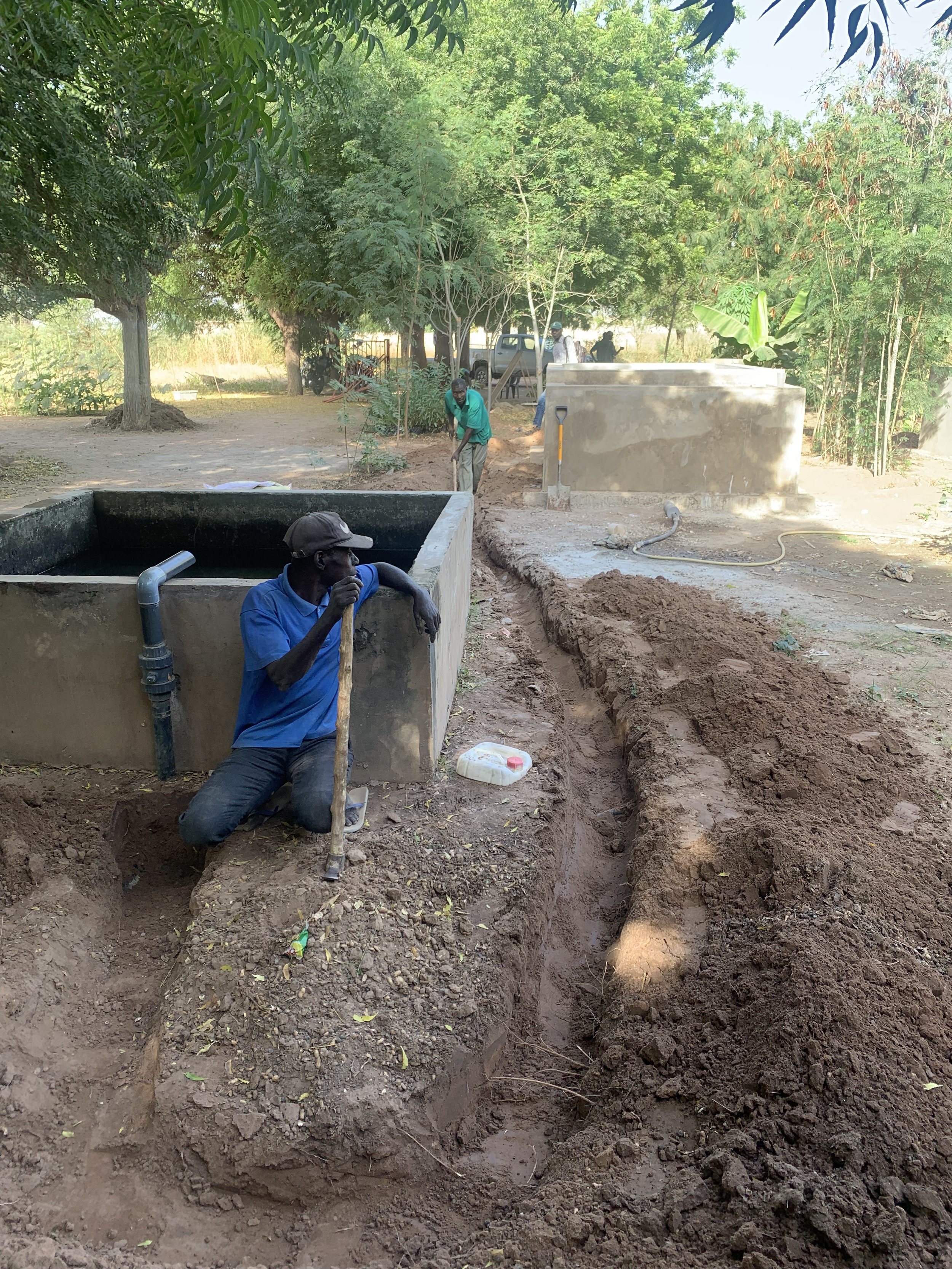
Readying the basins for the fish, part of a trial aquaculture project in four of our well- established gardens.

During our latest trip to Senegal, Garrison and Lewis worked with our Senegal staff to add yet another exciting element to four of our gardens near Keur Soce - Aquaculture!  In a partnership with the Auburn University, that started in 2019, we are embarking on a trial fish farming project to raise Tilapia and Clarias Catfish in the gardens. 

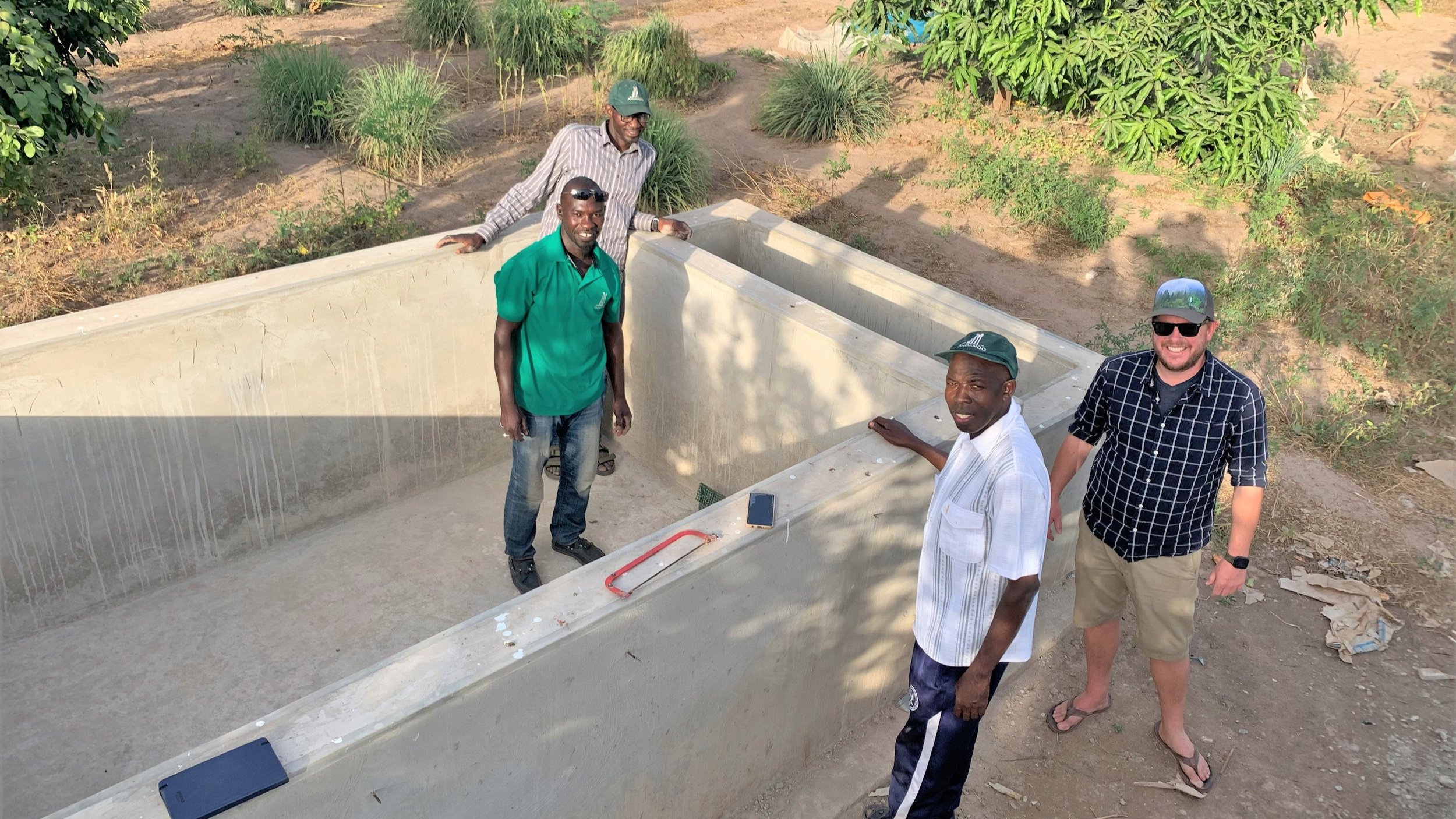
Filling the two large basins that will be home to Tilapia and Clarias Catfish in the gardens.

Fish are an essential part of daily life in Senegal and while dried fish are readily available throughout the country, fresh fish can sometimes be scarce in inland areas.  Producing fish locally is a wonderful addition to food security and our nutrition objectives.

But where does one get baby fish in Senegal?  Well, as with most things, you gotta know a guy.  Fish farming isn’t commonplace yet in Senegal but it does exist and there is a small network of fish producers around the country.  Our coordinator from Auburn gave us a list of phone numbers and that’s all we needed. 

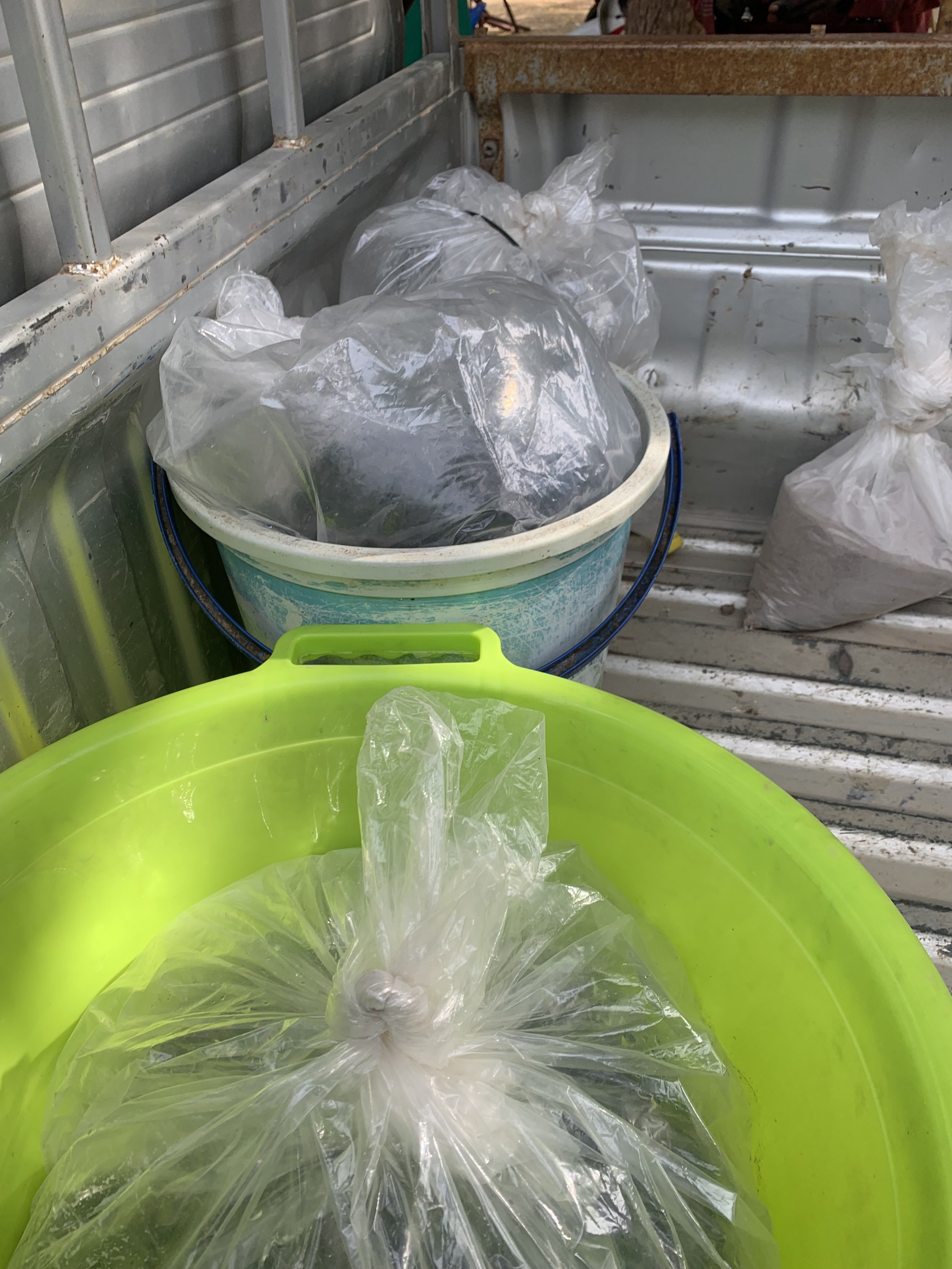
Naturally none of those contacts had any fish available but believe in the magic of Senegal and our Country Director Boubou!  He connected the dots from one person to the next until just a few days later, as if by magic it seemed, we were driving into town with 500 fingerlings in the back of the truck!  We introduced the fish into the basins to the general amazement from everyone, ourselves included. 

The significance of what this could mean for the gardens wasn’t lost on anyone and both the technicians and the women in the gardens were eager and attentive as we explained the project. 

We left everything in their capable hands and a month later we are happy to report that the fish are doing great!  This is only the beginning.  We’ll keep you updated as the fish grow and we see the many benefits they bring. 

Recipe: Banana Fritters

Looking for something different to serve this week at your holiday gatherings? Consider West African Banana Fritters.

Bananas are in season in Senegal! Garden participants in Podor showcase their harvest of delicious, organic bananas.

Locals in Senegal enjoy bananas in a variety of ways, one of the more common is in fritter form. Enjoy this recipe during the holidays or any time of the year.

West African Banana Fritters

Ingredients:

  • 3 bananas (the more ripe, the sweeter your fritters will turn out)

  • 2 eggs

  • 1/2 cup milk

  • 1 tsp vanilla extract

  • 1-2 cups all-purpose flour (adjust for desired thickness of batter)

  • 1/2 tsp salt

  • 3 tsp baking powder

  • 1/8 - 1/4 cup brown sugar (adjust for ripeness of banana)

  • 1/2 tsp ground cinnamon

  • 1/4 tsp ground nutmeg

  • 1/4 tsp ground cardamom (optional)

  • oil (for deep frying)

  • powdered sugar (for topping)

Instructions:

  1. Mash bananas with a fork in a large bowl.

  2. Add remaining wet ingredients to bananas and combine well.

  3. In a separate bowl combine all dry ingredients and add to banana mixture. Stir until fully incorporated.

  4. Heat oil in large skillet over medium-high heat. Once oil is hot pour 1/4 cup batter in the oil (if you prefer a thicker batter you may need to drop batter in oil with a spoon). Flip fritter when it starts to brown on the bottom (bubbles may start to appear on the surface of the fritter).

  5. Place on a paper towel lined plate and dust with powdered sugar. Enjoy!

Khoyan, President of the Market Garden in Keur Pathe Malick, prepares fritters which she sells in the market of her village.

Market Gardens boost household income of garden participants and provide food security to entire communities as well. Click here to learn more about our market gardens.

Recipe adapted from Food.com and Allrecipes.com

Advancing Education = a Better Future [Video]

When we first started construction on the Keur Soce High School we spoke with incoming freshman, Fatimata, about what this means for her.. Click here to watch the full video.

When I heard that they were building classes here, specifically for high school, I was so happy. I didn’t want to leave my village [to attend school], I wanted to stay here, I wanted to learn here and succeed here. I love science subjects... I would like to be in a health center like a doctor.
I want to help people, to cure people.
— Fatimata Ba, Freshman Keur Soce High School

From the Director - October 2021

A bountiful and varied harvest of eggplant, melons, turnips, peppers, and greens provide nutrious food to hundreds of families.

A bountiful and varied harvest of eggplant, melons, turnips, peppers, and greens provide nutrious food to hundreds of families.

It was only about eight years ago that we started our first two gardens in Keur Socé, Senegal. What began as a bit of an experiment for us, spurred on by the ambitious women’s cooperatives as to what their potential might be, launched a program that has changed the lives of thousands of people across Senegal.

We knew this had potential, seeing so many people with the skills and knowledge but without access to year-round water and other primary inputs. But we are continually blown away by what this has become – a massive boost to both tangible income and unquantifiable gains in women’s health, students’ ability to learn and grow, and renewed hope for the future for all those involved.

By the end of this year, we will have 33 gardens in operation with around 3,000 active participants. It is hard to capture just what this has done for these communities, with literally hundreds of thousands of dollars produced and circulated in local economies. One incredible milestone is that we recently reached over 500,000 pounds of produce grown in our gardens in the last couple years alone.

Outside a family home in the village of Fas Toucouleur.

Outside a family home in the village of Fas Toucouleur.

This equates to a stronger, more resilient community, with dynamic economic activity, and a healthier population able to thrive where they are. We are proud of what we have built through your continued efforts, and we hope you can take joy in knowing the difference you have made. There are so many more communities we can reach, and we look forward to many more years of success.

“Jéréjëf!” – Thank You!
Lewis Kiker, Executive Director

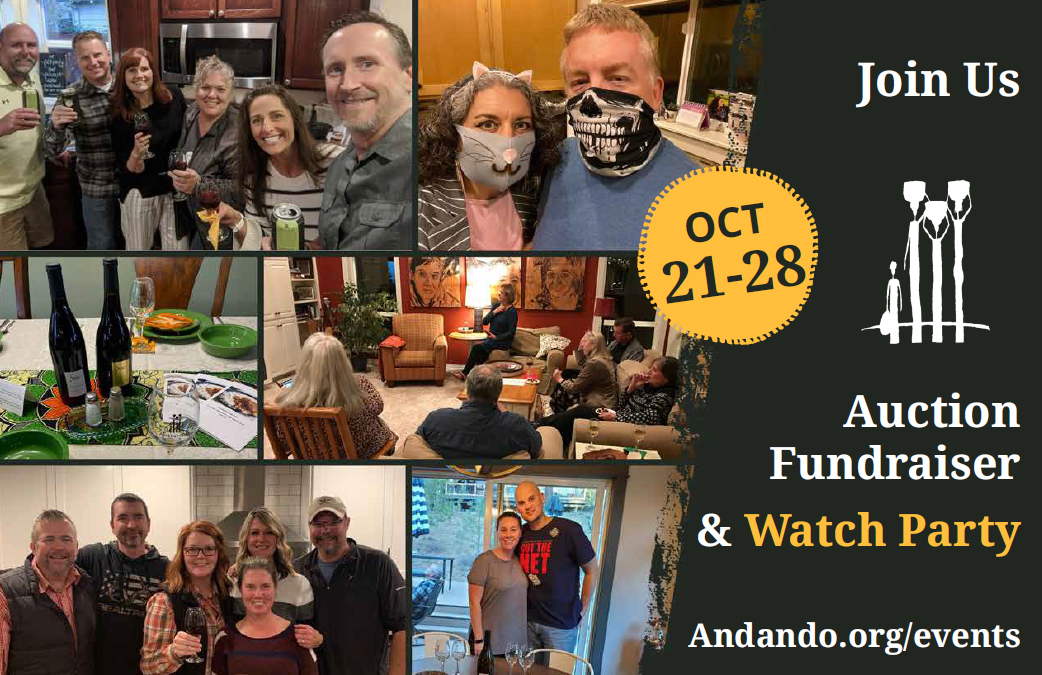
Host an Auction Watch Party

Screenshot (2).png

You can help us create a sense of community AND increase your impact by hosting a Watch Party for our live-streaming auction.

Watch Parties are a meaningful way to come together as a community and focus on a shared mission, it’s fun and joyful!
— Cindy, Party Host 2020 & 2021

A party can be just your household, or can include friends and family. Register your party with us by October 15th and we’ll provide a complimentary Party Box to help make things festive. Contact crystal@andando.org for more information.

Download our Watch Party Info Sheet. Or Contact Crystal@andando.org for more information.